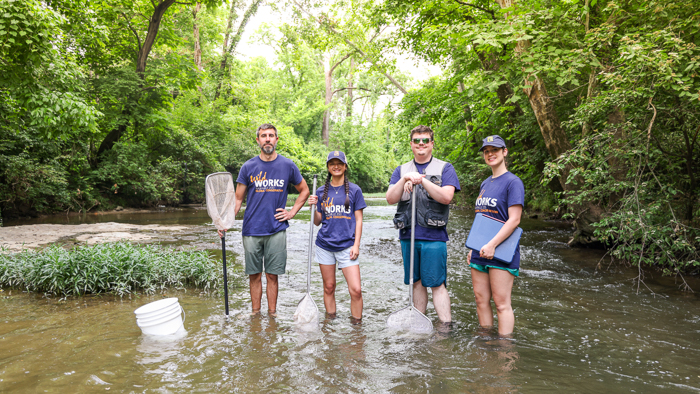

Our Aquatics Team continues conservation work close to home as they actively work to protect endangered wildlife right here in Nashville by monitoring populations of the Federally endangered Nashville crayfish. Read the latest updates on this important project below.
In 2011, our team received our first grant for this work from the U.S. Fish and Wildlife Service to develop protocols and begin long-term population monitoring of the Nashville crayfish (Faxonius shoupi). This species is found nowhere else in the world; its entire range is limited to Mill Creek and its tributaries in the greater Nashville area. One of those tributaries even runs through Nashville Zoo. Nashville crayfish are listed as endangered by the International Union for the Conservation of Nature (IUCN). This species is listed due to it having an extremely small range in a highly developed watershed where a single pollution event could be problematic.

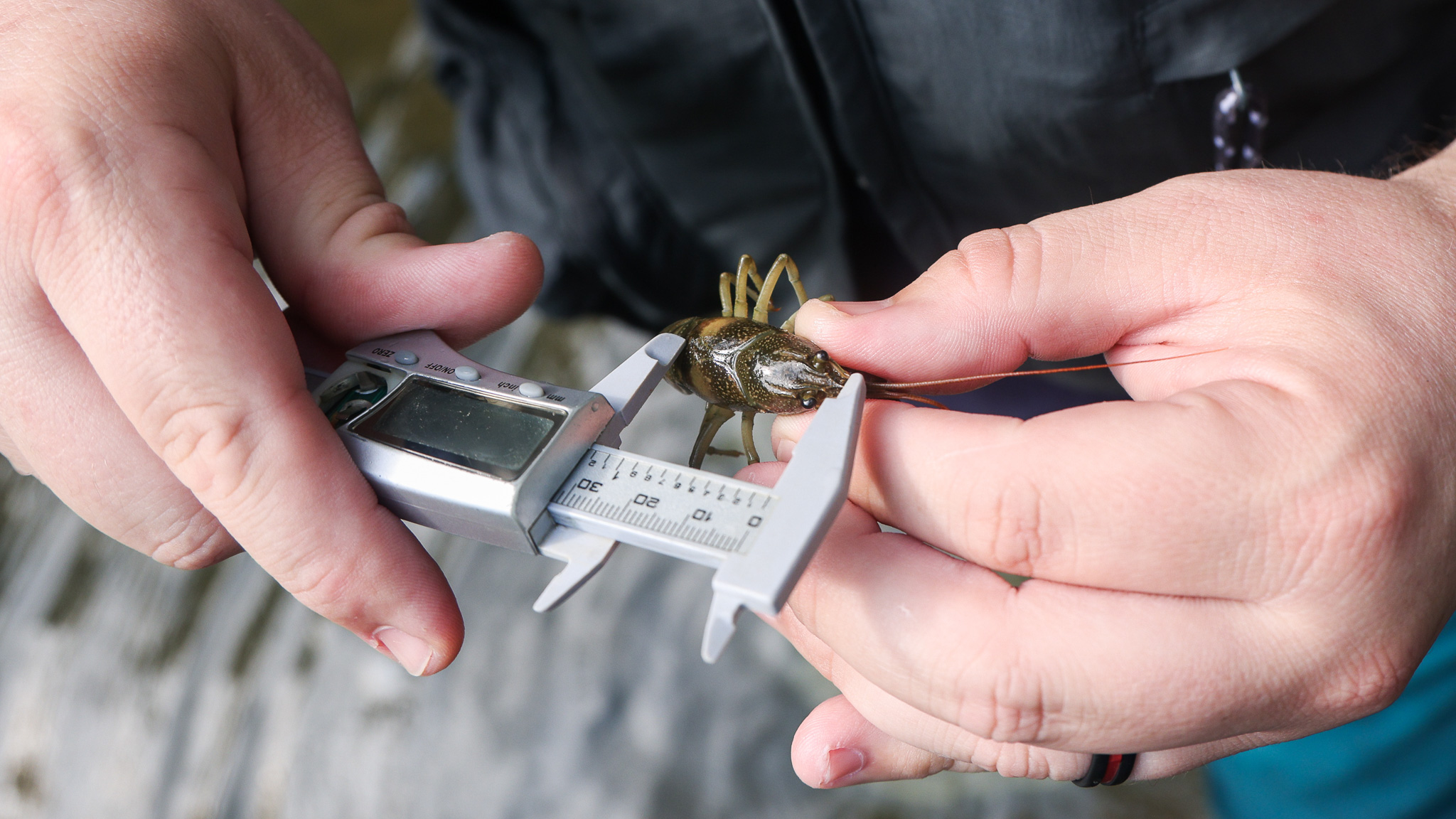
Since the start of this project, our team has monitored the same four sites along Mill Creek to accurately track population trends and water quality over time. This June, they returned to these sites and recorded more than 300 individual crayfish. Each crayfish is measured, sexed, and identified based on the type of rock it was found under, typically flat slabs of limestone or other rocks in fast-moving streams.
Although small in size, Nashville crayfish play a vital role in the local ecosystem. They serve as a food source for over 240 other species, including fish, raccoons, and reptiles. Nashville crayfish can grow up to 7 inches long and, like all crayfish, have four pairs of legs and two pinchers. You can help protect this unique species by keeping your local waterways clean. Every creek, stream, or storm drain eventually connects to a larger river, often the same rivers we rely on for drinking water.
Here are a few simple ways to make a difference:
- Pick up trash and other debris before it enters waterways.
- Avoid leaving exposed soil on your property, and use pesticides sparingly; runoff from rain can carry pollutants directly into streams.
- If you live near a creek, leave streamside vegetation intact. Grasses, trees, and native plants help stabilize soil and filter runoff.
Together, we can help protect the only species found exclusively in Nashville’s backyard.